
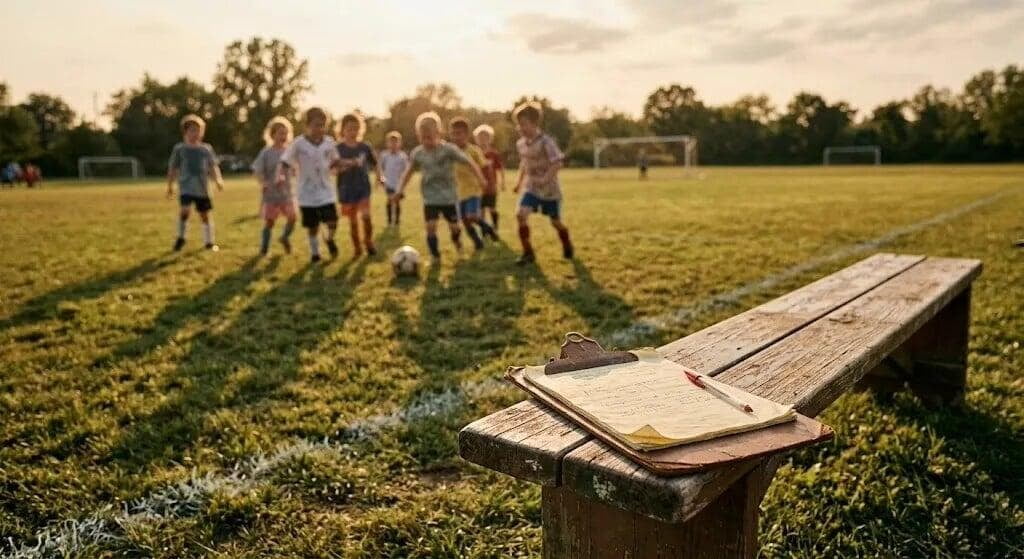
Bear with me…this one is personal.
After eight years I stepped down as President of the Township of Mahwah Youth Sports Boosters two weeks ago.
I’m not sure I fully understood what I was signing up for when I raised my hand. I don’t think anyone does. You say yes to one thing and suddenly you’re negotiating field time, recruiting volunteers, managing budgets, and sitting in rooms debating whether the third/fourth grade soccer league needs a trophy ceremony.
It was the best and most rewarding kind of volunteer work I’ve ever done.
We are the largest volunteer organization in town. Families count on us to get it right every season or at least try to get it right. Knowing that kept me coming back every day and kept me up some nights. I still have nightmares from the COVID years.
What I’m most proud of isn’t any single season or any single program. It’s that we made sure any kid who wanted to play, played. No family left on the sideline because the cost got too high.
That was the point. That will always be the point.
I’m going to jump on soap box for a moment because what TMYSB has always stood for is increasingly rare.

I left at a moment when youth sports in this country is genuinely thriving.
Participation numbers are up. Facilities are better. Coaching has professionalized. Kids are faster, more skilled, and more competitive than they were when I started.
And yet, something is broken. Not in Mahwah. Nationwide.
The club and elite program model has become a machine that prices families out and calls it excellence. Travel teams. Paid coaches. Weekend tournaments three states away. Private training. The investment to compete at a “serious” level has crossed from ambitious to irrational for most families.
I’ve watched parents burn through money they don’t have because they’re afraid their kid will fall behind.
I’ve watched kids who love the game walk away because their family couldn’t keep pace with the fees. Or worse, because they’re burned out by thirteen.
The owners of these “elite” programs have gotten very good at selling a dream. Division I scholarships. Professional contracts. A future that justifies every dollar spent today.
It’s a promise none of them can make.
The odds of a youth athlete earning a Division I full-ride scholarship is one percent. The odds of turning professional are a fraction of that. The people running these programs know the numbers. They’re counting on parents not to look them up.
So families spend five, ten, fifteen thousand dollars a year chasing a promise that was never realistic. And when it doesn’t materialize, nobody in the program is accountable. The kid aged out. They just weren’t quite good enough. Better luck next time.
That’s not development. That’s a business model built on hope and a parent’s blind spot.
And then there are the parents themselves.
I’ve seen things on sidelines that I still can’t fully explain. Adults screaming at referees who are teenagers making nine dollars an hour. Parents berating their own kids in front of teammates. Parents showing up drunk at the field. Coaches being verbally abused in parking lots after losses. A ten-year-old crying on the way to the car because a parent turned a win into an interrogation.
We have built an environment where adults have forgotten who the games are for.
Research shows that kids consistently say the same thing when asked why they quit sports: it stopped being fun. Not because the competition was too hard. Not because they didn’t want to work. Because the adults around them made it feel like a job.
We are driving kids out of the thing we claim to love.
Youth sports was never supposed to be a pipeline industry.
It was supposed to teach kids how to lose without quitting, how to win without becoming someone no one likes, how to be part of something larger than their own stat line. Resilience. Accountability. How to look a teammate in the eye when you let them down. How to come back the next day.
Those aren’t lessons you learn at elite showcases. They’re learned in the fifth game of a losing season when a ten-year-old decides whether to give up or keep going.
The skills that travel best into adult life aren’t the ones on a highlight reel. They’re the ones you build in the moments no scout ever watches.
TMYSB has known this for a long time. It’s why any kid who wants to play, plays. It’s why the question we always came back to wasn’t about rankings or recruitment. It was about the kids in front of us.
I don’t know exactly what comes next for youth sports. I’m not sure anyone does.
What I do know is that if we keep organizing these programs around the question “how do we develop the next generation of elite athletes,” we’ll keep making the decisions that got us here.
If we start organizing them around the question “what do we want this experience to do for kids,” the decisions look different.
That’s the question I hope and know TMYSB will continue to ask.
It was an honor and privilege to be in the room.