
TL;DR: All branded merchandise a firm sends on behalf of its brand is testimony. Prepared or unprepared. The firms that understand this build client loyalty without saying a word. The ones that don’t are spending real money to quietly undermine the brand they spent years building.
________________________________________
There is a room beneath the Augusta National pro shop most people will never enter.
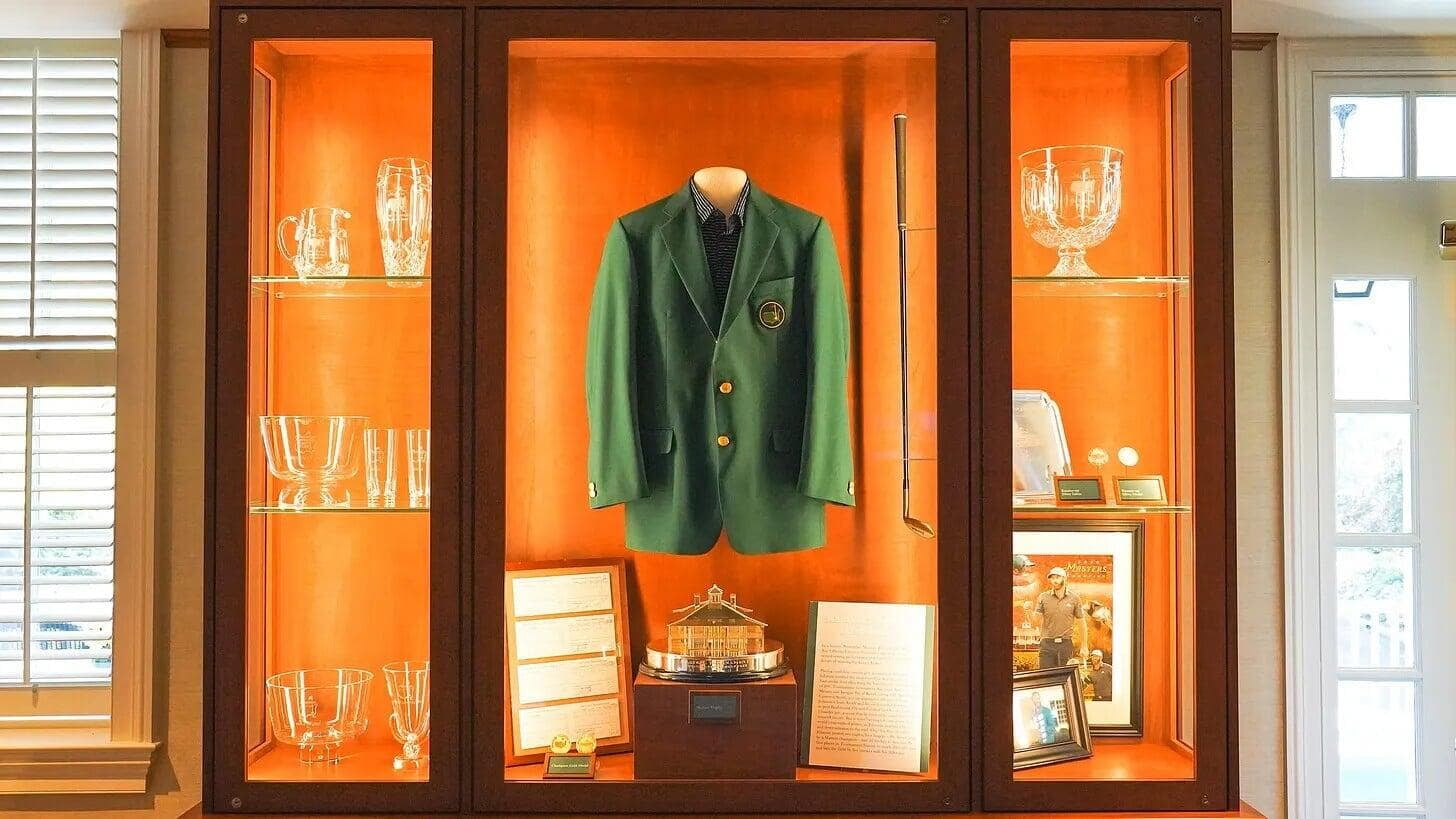
The Green Jacket Vault. A tailor keeps it. A chairman oversees it. When a Masters champion is fitted, the ceremony happens there, in private, with precision. The jacket never leaves the grounds. You cannot buy it. Its power comes entirely from what it withholds.
One logo. Left chest pocket. No repetition. No saturation.
That jacket carries more brand meaning than most companies produce in a decade of marketing spend. Augusta achieved it by doing one thing differently. They designed the meaning before they designed the item.
Most branded gift programs are running the exact opposite playbook.
I see this all the time. A law firm invests six figures in a website refresh. The partners obsess over every detail of the pitch deck. The conference room renovation gets its own committee. Partner headshots go through three rounds of approval. Every controlled touchpoint gets scrutinized because the firm understands that perception is the product.
Then the client gift arrives in a poly bag. A branded power bank. A $12 journal with a foil-stamped logo. A box that took eleven seconds to open and left nothing worth remembering.
Nobody calculated what those objects communicated. Nobody asked what the client felt when the package hit their desk.
According to the 2025 Legal Trends Report, 43% of clients select a professional service firm based on reputation. Reputation is not only built in the courtroom or the conference room. It is built at every touchpoint, including the ones treated as afterthoughts.
That gap costs firms more than they know.
________________________________________
What Augusta Knows That Your Gifting Program Doesn’t
The branded merchandise industry has trained buyers to think about gifting as a logistics problem.
How many units? What is the per-item cost? What is the lead time?
Augusta National has never asked any of those questions first.
During Masters week, the club generates roughly $10 million per day in merchandise revenue. Patrons wait 90 minutes in line to spend, on average, $1,000 on merch with a single logo. The Green Jacket carries one logo placement on the left chest pocket. No repetition. No version for every occasion.
The lesson here is not about scarcity as a tactic. The lesson is simpler. Visibility and significance are not the same thing. Augusta National has never confused them.
Most gift programs confuse them every quarter.
Consider the managing partner who ships a commodity notebook to a general counsel before their next meeting. That item just testified on behalf of the firm. Nobody prepared it. Nobody thought about what it said when the GC picked it up, turned it over, and set it aside. They thought about the deadline and the budget approval.
That notebook is testimony. Unprepared testimony.
Think about how that same firm handles everything else client-facing. Every brief gets reviewed and approved before it goes out. Every senior partner email gets read twice. The pitch deck gets rehearsed. The proposal gets a second set of eyes.
The holiday gift? Ordered in October by someone with 40 minutes and a catalog.
This is the most underexamined brand risk in professional services. Firms audit their marketing collateral. They analyze pitch win rates with precision. The gift program gets a budget, a catalog, and a Q4 reminder on the calendar.
Companies using premium gifting see greater client retention compared to firms relying on standard promotional items. For most professional service firms, that differential represents millions in lifetime client value.
That does not surprise me. What surprises me is how rarely it changes behavior.
The reason is framing. Firms frame gifting as an expense. A line item to minimize. A checkbox on the Q4 task list. That framing produces poly bags, foil-stamped journals, and sleep masks no one asked for.
The firms that get this right frame gifting as a brand decision. They apply the same scrutiny they apply to the website and the pitch deck. The gift gets the same question every other client touchpoint gets: what does this say about us?
All branded merch sent on behalf of a brand says something. The only question is whether the firm decided what it would say, or whether the item decided for itself.
When intention drives the selection, the gift becomes a physical extension of the brand.
________________________________________
The Five Questions That Turn a Gift into Brand Equity
Most firms are asking the budget question. How much should we spend per client? That is a logistics question. It produces logistics answers.
The right question is: what do we want this item to say before anyone reads the card?
When that question drives the decision, everything downstream changes. The merch changes. The packaging changes. The moment of opening changes. The client’s experience changes.
Step 1: Audit your last three gifts before you order the next one.
Pull up the last three things your firm sent to clients. A holiday gift. A new matter thank-you. An anniversary token.
Answer: what would a client conclude about your firm from this item alone?
If you cannot answer that confidently, you have your first data point. The gift communicated something. You do not know what. That is the problem worth solving before the next order goes in. Run the audit. Do it before sourcing begins.
Step 2: Answer the testimony question before you answer the product question.
Before anyone opens a catalog, answer this: what do we want the client to feel in the first ten seconds of opening this?
Ten seconds is roughly how long an initial impression forms. After that, the client is already integrating the experience into their existing perception of your firm.
Write the answer in one sentence before sourcing begins. Hold every product candidate accountable to it. If the merch cannot support that sentence, remove it from consideration before it goes any further.
Step 3: Design the four beats before you design the object.
This is the framework we use for every client gift program. Four beats. Each one a brand decision, not a logistics decision.
· Anticipation. What does the exterior of the package communicate before it is opened? The weight. The material. The label. Does it feel worth opening carefully, or does it feel like everything else in the day’s mail?
· Discovery. What is the first thing the recipient sees when the package opens? Is there a moment of pause built into the experience? A layer that builds toward the reveal?
· Reveal. How does the primary gift present itself? Is it positioned deliberately? Does the context around it add to its meaning, or does the product simply appear with no ceremony at all?
· Reaction. What does the recipient do in the 60 seconds after opening? Do they photograph it? Set it on their desk immediately? Set it aside to deal with later? The reaction is a direct measure of whether the preceding three beats succeeded.
Each beat is a brand decision. Treat it like one.
Step 4: Match the object to the narrative.
Every gift your firm sends should answer one question: why would this firm send this specific thing?
If the answer is “because it is practical” or “because everyone seems to like it,” that is a generic answer. Generic answers produce generic gifts. Generic gifts produce generic impressions, which is the outcome a firm with a strong brand can least afford.
A brand answer sounds different. “We send this because it reflects how we approach the work. We are a firm that values precision, so we chose something that required craft to produce. We are a firm that thinks in decades, so we chose something built to last.”
The merch does not need to be expensive to carry that answer. It needs to be chosen with that answer in mind.
Step 5: Measure it the way you measure every other brand touchpoint.
Your firm tracks website traffic, proposal win rates, and client satisfaction scores.
When did anyone last ask a client what they thought of the gift?
Not formally. A simple follow-up. “We sent you something last month. Did it land the way we hoped?” That question alone signals that the firm cares about the experience, not just the delivery.
Start tracking gifting as a brand touchpoint. Note what was sent, to whom, and when. Follow up in 30 days. Build a log. Over time, patterns emerge. The gifts that generate a response. The ones that get mentioned in the next meeting. The ones that never come up again.
That data is brand intelligence. Most firms leave it on the table every single quarter.
________________________________________
Back to Augusta
One logo. Left chest pocket. No price tag because the jacket was never for sale. Its value comes from one thing: every decision behind it was made with a clear answer to one question. What should this item say about us?
Your client opened your last gift before they took your next call. What they found is already part of how they see you.
So ask yourself if your last client gift could speak, what would it say about your firm?
________________________________________
THE CRAFTED TAKEAWAY
The branded merchandise industry trained buyers to treat gifting as a logistics problem. How many units. What is the cost. What is the lead time. Those are the wrong questions and they produce the wrong results every single time.
Visibility and significance are not the same thing. Augusta National has never confused them. One logo. One placement. All meaning. That is the standard every branded gift program should be held to.
________________________________________
What is the last gift your firm sent, and did anyone stop to ask what it communicated?