
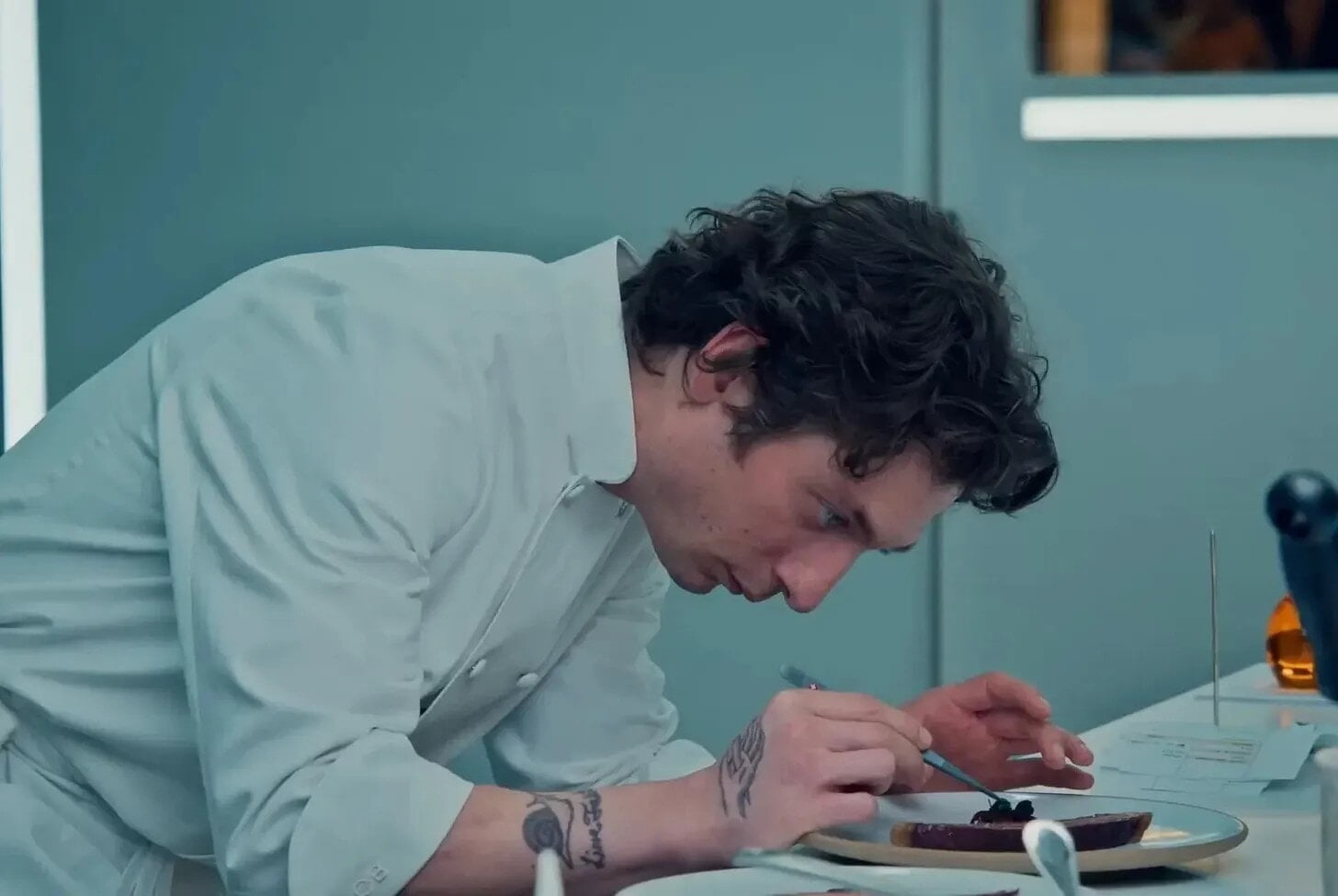
In The Bear, every detail gets the same level of care.
How a knife is held. How a ticket gets called out. How a side towel gets folded so it’s ready to grab in half a second, every single time.
Most people watching will never notice any of this on purpose.
But take it all away, and the whole show falls apart.
Your company runs the same way.
You spend hours getting a brief just right. You proofread contracts twice. Your conference room is spotless. Your website looks sharp. Your partners know exactly what to say in a client meeting.
Then a new client signs on, and you hand them a welcome kit with a stress ball and a pen that doesn’t quite match your logo.
The client won’t email you about it. They won’t bring it up at the next meeting. But somewhere in the back of their mind, something feels a little off. The polished pitch and the low-quality gift don’t match. And once a client starts noticing things that don’t match, they start looking for more.
Every box, every gift, every folder, every pen that goes out under your firm’s name is part of your brand. Not a separate thing from it. Part of it.
I’m stealing a page from The Bear. We’re going to talk about why your brand has no back of house, and walk through a simple way to make sure everything that goes out the door meets the same standard as your best work.
There’s No Back of House in Your Brand
Most companies split their brand into two piles, without ever saying it out loud.
Pile one is the important stuff. Your website. Your office. Your pitch deck. The way partners talk in a client meeting. Every word here gets reviewed, edited, and reviewed again.
Pile two is everything else, things like:
Client gifts
Conference merch
Welcome folders
Team apparel
Notepads, pens, and other small items with your logo on them
Holiday gifts and event giveaways
Pile two gets whatever time and budget is left over. Whoever’s free orders it, picks whatever’s available, and moves on to the next thing.
This split feels normal. It’s how almost every firm runs.
Your client doesn’t see two piles. They see one firm.
When a new client visits your office for the first time, you make sure the space looks great. The team is sharp and prepared. The meeting goes well, maybe better than expected. At the end, someone hands the client a folder with your logo on it, along with a notepad, a pen, and a small gift bag.
That night, the client opens the bag at home. The notepad is fine. The pen barely writes. The gift is the kind of thing that ends up in a drawer and never comes out again.
That one bag just told the client something different than everything else did that day.
The client doesn’t experience your brand in pieces, with a little grade attached to each one. They experience it as one thing, all at once. A great meeting and a low-quality goodbye gift don’t cancel each other out. They sit right next to each other.
This is the Memory Gap. It’s the space between what you think your brand is telling people, and what they walk away feeling. The bigger that gap, the more work your team has to do later to close it, often without even knowing the gap is there.
David Ogilvy, one of the most famous ad men in history, held himself to a simple rule before anything went out under his name. In Confessions of an Advertising Man, he put it this way: “I never run an advertisement I would not want my family to read.” Swap “advertisement” for “merch,” “welcome kit,” or “conference tote,” and you’ve got the exact same test for your firm.
This matters even more if your whole reputation is built on being careful. Law firms, finance firms, consulting firms, you’re all selling judgment. Clients pay you to be exact, about contracts, deadlines, filings, everything. So when one small item from your firm feels rushed or generic, it doesn’t just look bad. It quietly raises a question about whether you’re as careful as you say you are, in places nobody’s checking.
Back to The Bear…there’s no back of house in branding.
A restaurant kitchen can be loud and messy, and as long as the plate that comes out front looks and tastes right, the customer never knows or cares. But your firm doesn’t have a kitchen door separating the mess from the dining room. Everything you send out is the dining room. The gift bag is just as visible as the website. It just gets noticed at a different time, when you’re not in the room to explain it.
So what could change this?
One rule: every piece of branded merchandise that leaves your firm, no matter how small or how “extra” it feels, gets held to the same standard as your best work.
Imagine a firm that used to handle client gifts the way most firms do, whatever’s quick, whatever’s on sale, logo added at the end. After applying this rule, every item got run through one question before it could go out.
If the answer was no, it didn’t go out.
I’ve been doing this for almost 25 years and the companies that get this right don’t make a big deal out of it. Nobody writes a press release about a notepad. But slowly, the brand stops feeling like an afterthought and starts feeling like one more piece of proof that this firm pays attention, in everything, all the time.
Running Your Brand Like a Kitchen
In a great kitchen, nobody decides what “good enough” means in the middle of a busy Friday night.
That decision already got made. Days, weeks, even years before. Every station knows exactly what a finished plate is supposed to look like, taste like, and feel like. Nobody’s guessing. Nobody’s freelancing. The standard already exists. The team just runs it.
Most firms have never done this for their brand. There’s no agreed-on standard for what a “good” client gift looks like, or what a “good” welcome folder includes. So every time someone needs to order something, they’re starting from zero, usually under a deadline, usually picking whatever shows up first in a search.
Step 1: Run Your Mise en Place
In a kitchen, “mise en place” means everything is prepped and in its place before service starts. No surprises once the orders come in.
For your firm, this means making a list. All merch that goes out under your name. Client gifts. Welcome kits. Conference merch. Notepads. Folders. Pens. Holiday gifts. All of it.
Most firms have never written this list down. Once you do, you’ll usually find more items than you expected, and a few you forgot were even still being ordered.
You can’t fix what you haven’t counted.
Step 2: Write the Recipe Card
Every dish in a great kitchen has a recipe card. Not a vague idea of what it should be. An exact one. Same materials, same amounts, same finish, every single time.
Your firm needs the same thing for each item on your list. The actual pen, with a real model and ink color. The actual folder, with the exact paper, color, and finish.
This turns “make it look nice,” which means something different to everyone, into a real standard anyone can follow. You, a new hire, or someone in another office.
Step 3: Assign the Station
In a kitchen, every station has someone running it. The grill cook owns the grill. Nobody else touches it.
At most firms, nobody owns client gifts or merch. It’s “whoever has time,” which really means nobody, until it becomes an emergency.
Pick a person. Marketing, ops, admin, even a partner who actually cares about this stuff. Give them the list from Step 1 and the recipe cards from Step 2, and make it their job to keep everything on standard.
When something is everyone’s job, it’s nobody’s job. When it’s one person’s job, it gets done.
Step 4: 86 the Weak Plates
In a kitchen, if a dish isn’t right, it doesn’t go out. The cook sends it back, or it gets pulled from the menu for good. That’s what “86” means. Done. Gone. Not happening.
Go back through your list from Step 1. For each item, ask one question: if this got handed to your favorite client, would you feel proud, or would you wince a little?
If you’d wince, 86 it. Stop ordering it. One great item beats three items where two of them quietly make your firm look less careful than it is.
Step 5: Put Someone on Expo
In a busy kitchen, the expo is the person standing at the pass, checking every single plate before it leaves the kitchen. Wrong garnish, smudge on the rim, wrong temperature, it gets caught right there. Nothing goes out without a look first.
Your firm needs the same thing. Before a gift, kit, or batch of merch goes out, someone should physically check it against the recipe card from Step 2. Not just approve the order. Check the actual item, in their hands.
This step catches the small stuff. The slightly-off color. The logo that’s a little crooked. The thin zipper on an otherwise nice bag. The kind of thing that’s easy to miss on a screen and impossible to miss once you’re holding it.
Step 6: Make It Repeatable
The last step is making sure none of this depends on one person remembering everything.
Write it down. The list, the recipe cards, who owns what, what the expo check looks for. Keep it somewhere anyone on your team can find.
This is the difference between a kitchen that runs well because of one talented chef, and one that runs well no matter who’s working that night. The second one is the one you actually want.
Once you’ve run through all six steps, here’s what changes. Every physical thing your firm sends out, big or small, becomes part of the same story your best work tells. No more pile two. No more hoping nobody notices the gap between your pitch and your gift bag.
That’s The Bear Standard. Treat every plate the same. Every single time.
The Crafted Takeaway
Run Ogilvy’s test on everything, not just ads. Before anything leaves your office with your firm’s name on it, ask: would I be proud to hand this to my best client, my toughest partner, or my own family? If the answer’s no, it doesn’t go out. That’s the whole standard. Every plate. Every time.
Go find the closest branded item in your office right now, a pen, a notepad, a tote bag in the corner. Would it pass the test?