
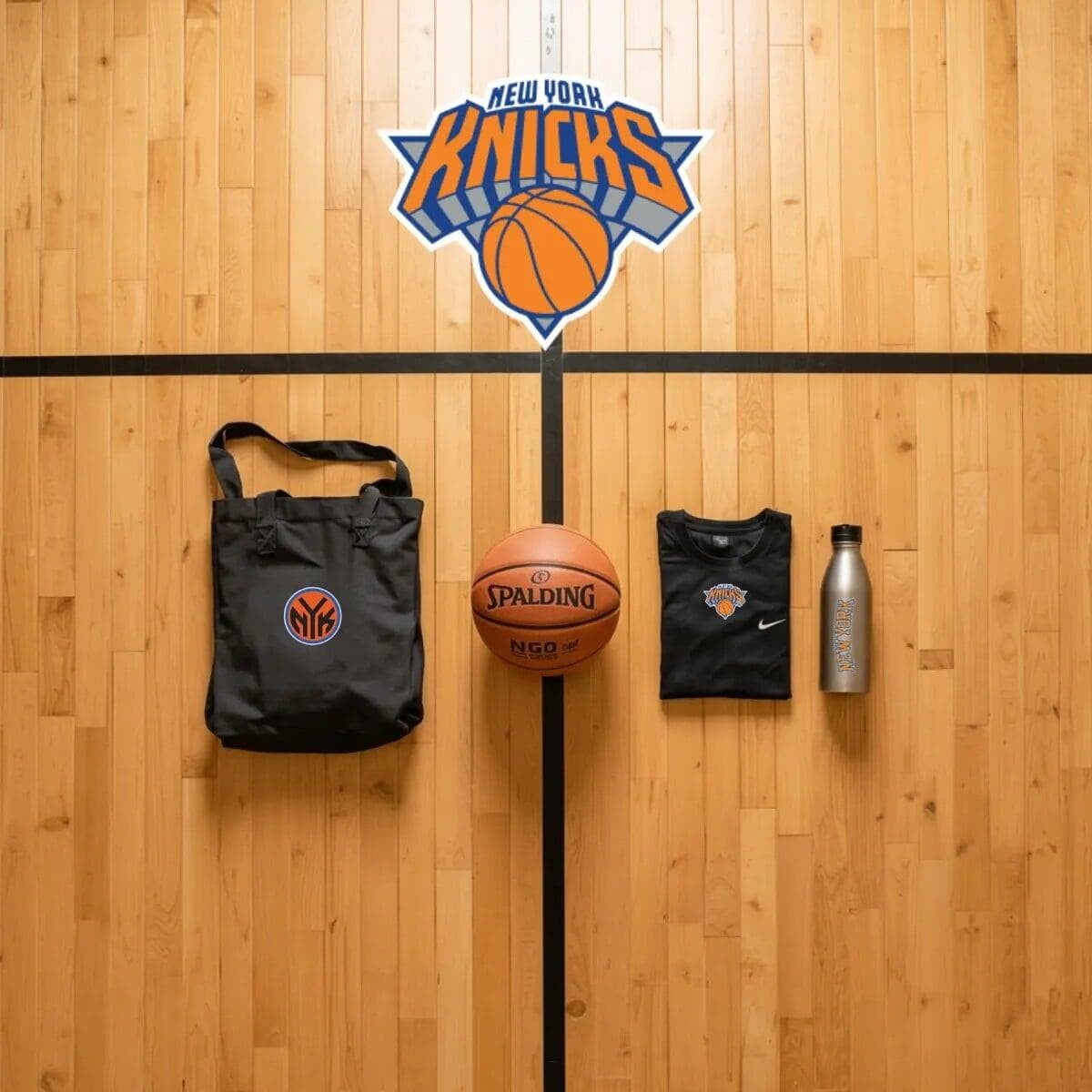
TL;DR: The Knicks just swept their way to the Finals without a single superstar. Eleven wins. All by double digits. A complete system executing at every level. Your brand has the same opportunity.
Eleven straight wins.
All by double digits.
No generational talent carrying the load on one set of shoulders.
The New York Knicks advanced to the NBA Finals for the first time in 27 years. And they did it the way nobody does it anymore. They did it with a system.
Jalen Brunson. Karl-Anthony Towns. Mikal Bridges. Josh Hart. Each one showed up. Each one played their role. Each one executed at the same standard.
When Brunson went cold, Towns was there. When Towns needed a breather, Bridges stepped up. When the moment called for grit over grace, Hart was already on the floor diving for the loose ball.
Just a team that built depth on purpose and trusted it when it mattered most.
It’s one of the cleanest illustrations of brand strategy you’ll see all year.
Because the firms that build lasting client relationships don’t do it with one impressive gift, one beautiful welcome kit, or one perfectly executed onboarding moment. They do it because every layer of their brand shows up at the same standard. Every time. Without exception.
Most firms don’t have that. They have a star player and a thin bench.
Brand consistency can increase revenue. Most firms never actually build consistency. They invest in the moments that are visible and ignore the ones that aren’t. They treat branded merchandise touchpoints as one-off decisions instead of a connected system.
The Knicks didn’t win eleven straight by showing up big once. They won because the system showed up every single night.
The Brand Depth Problem Nobody Wants to Talk About
Most firms treat every merch touchpoint like a separate project.
Welcome kit? That’s a Q4 initiative.
Conference merch? That’s on the events team.
Client gifts? Legal handles it in December.
Employee onboarding kits? HR has a vendor for that.
Each one gets its own budget, its own timeline, its own level of care. And each one reflects a slightly different version of the brand. Some polished. Some forgotten. Some actively embarrassing.
Nobody connects the dots. Nobody asks what the full picture looks like from the client’s perspective.
It’s not a design problem or a budget problem. It’s a system problem.
Think about what happens when the Knicks lose a key player for a night. The system doesn’t collapse because the next player in rotation already knows the play. The standard doesn’t drop because the standard was built into the process, not the personality.
What happens when the partner who always selects the client gifts goes on vacation? What happens when a new marketing coordinator orders conference materials without a clear brief? What happens when the welcome kit that used to look premium gets quietly downgraded because someone found a cheaper option?
The brand drops. Not dramatically. Not all at once. Slowly. Touchpoint by touchpoint.
I’ve seen it happen at firms that would never let their website look off-brand for a single day. The same firms shipping client gifts in packaging that would embarrass a mid-tier e-commerce brand.
Your brand is only as strong as its weakest branded merch touchpoint.
A client who receives a stunning welcome kit and then attends your booth at a conference where the merch looks like it was ordered from a catalog in 2011 doesn’t think “impressive welcome kit.” They change their entire impression of you. The weakest moment overwrites the strongest one.
One law firm I know invested significantly in a new client welcome kit. Beautiful materials. Intentional design. The kind of unboxing experience that makes someone post it on Instagram. They were rightfully proud of it.
Six months later, their managing partner attended a bar association conference. Their booth looked like every other booth in the room. Generic table cover. Logo pens. A candy dish.
The welcome kit didn’t save them in that moment. The booth told the story.
The fix isn’t spending more. The fix is building consistency. Every branded merchandise touchpoint your brand owns, mapped, evaluated, and held to the same standard. Not a flagship piece surrounded by afterthoughts. A system where every layer executes.
The Knicks didn’t build a champion by finding one great player. They built one by making sure every role was filled with intention. Your brand story deserves the same system.
Build Your Brand’s Bench
Josh Hart dove for 14 offensive rebounds in a single playoff game this spring.
Nobody hired Josh Hart to be the star. They hired him to do the hard, unglamorous work that stars don’t want to do. And he showed up every night and did exactly that.
Brand consistency works the same way. The unglamorous touchpoints, the follow-up package, the conference booth, the employee onboarding kit, are the Josh Harts of your brand program. Nobody applauds them. But when they’re missing, you feel it.
Blair Enns wrote in Pricing Creativity that the firms commanding premium fees are the ones clients trust completely, not partially. Partial trust is built by inconsistency. A brand that shows up brilliantly in one moment and carelessly in the next is a brand that teaches clients to hedge.
Step 1: Run the Touchpoint Audit
List every merch moment a client, prospect, or employee encounters your brand.
Welcome kits. Conference booths. Client gifts. Employee onboarding packages. Event merch. Follow-up mailers. Holiday gifts. Pitch leave-behinds.
Most firms have never done this. They know their flagship pieces and have a vague awareness that other touchpoints exist. The audit makes the full picture visible for the first time.
You cannot fix what you haven’t named.
The Knicks’ coaching staff charted every defensive assignment, every rotation, every scenario before the series began. They didn’t improvise depth. They mapped it.
Step 2: Score the Gap
Rate each touchpoint on a simple scale against your brand standard.
Does it look like the same brand as your best piece? Does the quality match the promise your firm makes in every other context? Would you be comfortable if your best client saw it?
Be honest. Most firms will find three or four touchpoints that would make their marketing director wince.
A single weak touchpoint retroactively weakens every strong touchpoint around it. The client forms one impression from all of it.
Step 3: Prioritize the Bench
Fix the weakest touchpoint first. Not the most visible one.
The instinct is to improve what most people see. But the weakest touchpoint is where trust erodes fastest. It’s the gap in the rotation that opposing teams exploit.
Pick the one that would cause the most damage if a key client encountered it tomorrow. Start there.
One fix at a time. Sequenced with intention.
Step 4: Set the Standard
Define what “on-brand” looks like at every layer of your merch program, not just the flagship pieces.
This means materials. Packaging. Quality tier. Unboxing experience. The full picture. Document it. Make it a brief that anyone on your team can execute without a hero decision every time.
The Knicks ran the same sets in Game 4 of the sweep that they ran in Game 1. The system didn’t depend on anyone remembering what to do in the moment. It was already built.
Step 5: Build the Repeatable Play
Create a process so the system runs without a star.
Every touchpoint should have an owner, a standard, and a timeline. Not a person who “handles it when it comes up.” A defined process that executes at the same level whether the managing partner is in the room or not.
This is what separates firms that have great moments from firms that have great brands.
Great moments are dependent on the right person making the right call at the right time. Great brands are built on systems that execute regardless of who’s in the rotation that day.
The Knicks went 11-0 because no single player had to be great every night. The system covered them. The depth held.
The Crafted Takeaway
Your brand is not your best touchpoint. It’s the average of all of them.
The firms that win long-term client relationships are not the ones with the most impressive single moment. They’re the ones whose worst touchpoint is still good. That’s what a system buys you. Not a highlight. A floor.
Build the bench before you need it.
Walk through your own merch touchpoint audit this week. Write down every physical moment your brand shows up in a client’s world.
How many of them would you be proud to show your best client tomorrow?