Most companies waste their entire merch budget not because they pick bad items. Because they add merch like it’s an afterthought. Something to throw in because “everyone does it.”
I saw this firsthand with a SaaS company last year. They spent a ton on a product launch campaign. Premium hoodies. Wireless chargers.
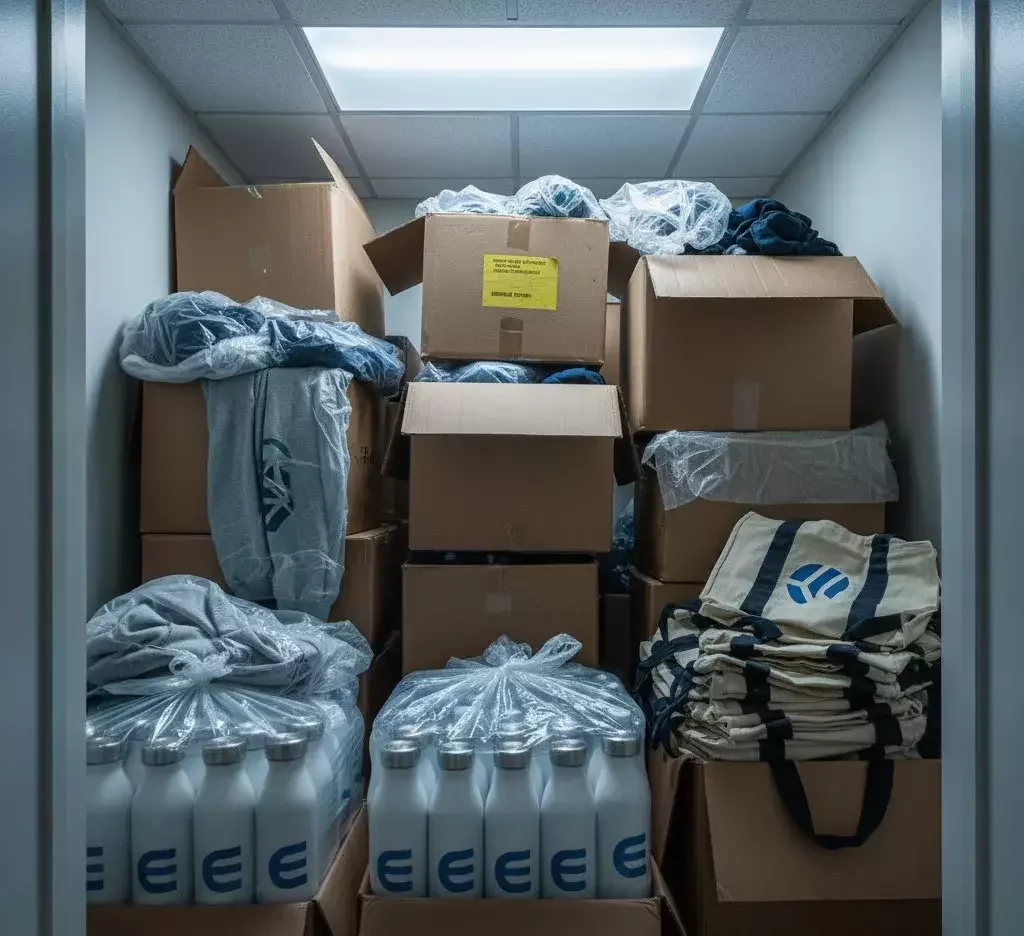
Six months later, their VP of Marketing showed me a photo of boxes of unused merch in their storage closet. Easily 40% of what they’d ordered. Sitting there collecting dust.
“We gave people stuff they didn’t need,” she said. “At a moment when they didn’t need it.”
Most merch doesn’t fail because it’s cheap or ugly. It fails because it has nothing to do with what’s actually happening.
Challenge
According to promotional products industry data, the average branded item gets used 6 times before it’s discarded or forgotten. SIX TIMES. For something you paid $15 - $50 for.
What this stat tells me is that bad merch doesn’t just waste money. It actively damages your brand.
You hand someone a generic water bottle with your logo. They already own four water bottles. Now yours is cluttering their cabinet. Every time they see it, they’re reminded that you gave them something useless.
That’s brand pollution not brand building.
The approach we’ve been told to follow is broken. Companies treat merch as an addition to the experience. Something separate from what they actually do.
Response
A law firm was rolling out a new client onboarding process. The managing partner wanted to “elevate the experience.” His first instinct was luxury gifts. Leather portfolios. Mont Blanc pens. The traditional law firm playbook.
Before we even started to talk about merch, I had him walk me through the actual client experience instead.
New clients were anxious. They didn’t understand the legal process. They weren’t sure what to expect. The first meeting was overwhelming and consisted of information overload about timelines, documentation, next steps.
We built an onboarding kit around a clear roadmap document showing exactly what happens when. A glossary of legal terms they’d encounter. A simple folder system for organizing their paperwork. Contact cards for every person they’d work with.
Nothing expensive. Nothing fancy. Just useful.
Their client satisfaction scores jumped but more importantly, clients stopped calling with the same confused questions. The kit answered them.
The managing partner called it the best $41 per client they’d ever spent.
This was the project that made me realize we’d been thinking about merch completely backwards. The question isn’t “what should we give them?” It’s “what moment are we in, and what would actually help?”
A creative agency hosting a brand strategy workshop. They needed something for attendees to capture thinking. We designed notebooks with prompts that matched each workshop section. People opened them in the first five minutes and filled them throughout the day.
A startup launching a complex new software feature. Users were struggling with adoption. We created a physical quick-reference chart printed on a microfiber cloth. Not a postcard. Something useful. With the most common workflows. Feature adoption jumped in the first month.
An accelerator welcoming a new cohort of founders. Instead of random startup merch, we built welcome kits around their actual first week. Day one items they’d use in orientation. Day three tools for their first mentor meeting. The merch became the program roadmap.
Most companies should give away less merch, not more.
Spend twice as much per item on things that actually serve a purpose. You’ll get better results. The $8 tote bag nobody needs is more expensive than the $40 speaker they use every day. Because the tote bag costs you brand equity. The speaker builds it.
Integration over Addition
Your merch should be part of the experience, solving a problem that exists in that moment.
Patagonia figured this out decades ago. Their merch isn’t random branded gear. It’s functional tools for the activities their customers actually do. Their repair kit isn’t a giveaway. It’s a product that reinforces their sustainability mission while serving a real need.
Mailchimp sends new customers a welcome kit. But it’s not swag. It’s a physical playbook that helps them use the software better. The “merch” is customer success in a box.
The Savannah Bananas don’t give away generic baseball merchandise. They design items that spark conversations. Their gear is their marketing and is interesting enough that people actually wear it and talk about it (like me).
The standard needs to be whether or not the item makes the experience better. Does it help someone do something? Does it reinforce your story?
If the answer is no, don’t make it.
Before you do anything with merch, map the customer journey. Find the friction points and the moments of confusion when people need help. Design for those moments. Not for what looks good in a catalog.
Hosting a workshop? Don’t send gifts afterward. Give people tools they use during the event. Make the merch part of the learning.
Onboarding clients? Don’t welcome them with a generic box. Give them exactly what they need for their first 30 days. Make your merch reduce their anxiety.
Launching a product? Don’t create awareness items. Create adoption tools. Make your merch help people use what you built.
It seems simple but it’s harder than it seems to stop thinking like a marketer trying to get your logo out there and start thinking like a service designer trying to improve someone’s experience.
A client of that law firm mentioned the kit in a Google review six months after we did their onboarding kits. “They thought of everything,” the review said. “Even gave us a roadmap so we knew exactly what to expect.”
That’s what happens when merch stops being merch and becomes part of how you deliver value.
People remember it. They use it. They talk about it.
Because it actually helped them.