Most companies treat merch vendors like ATMs. Send a request. Get a quote. Place an order. Done.
This is why your merch ends up in donation bins or, worse, landfills.
Does this sound familiar? You need 300 hoodies for an event. You call a merch distributor. They email you a 400-page e-catalog. You scroll through pages of identical-looking options. Pick something that seems “fine.”
They process the order. Ship it. Invoice you. Move on to the next account.
Zero thought. Zero creative. Zero connection to your actual brand story.
Your employees get generic hoodies with your logo slapped on the chest. They wear them once at the event. Then they end up in a drawer. Or a donation bin. Or a landfill.
Every piece of merch is a physical expression of your brand promise. When you hand someone a thoughtless, generic item, you’re telling them your brand is thoughtless and generic. You’re actively damaging your brand.
The Broken Model
The entire branded merch industry is built on a transactional model that prioritizes speed and cost over everythin. Distributors act as middlemen between you and factories with volume being their incentive. Never thinking about your brand story.
We’re no longer in the world of merch being just “stuff with logos.” Free pens at trade shows. Cheap tote bags at conferences. Your employees, prospects and clients expect more.
The old playbook doesn’t work anymore.
Our Approach
Earlier this year, a client came to us needing hoodies for their Series B announcement. They’d just closed $15 million. They were scaling fast. Hiring aggressively.
The easy thing to do was to order 500 hoodies from the usual supplier. Embroidery them in two-weeks. Charge the client $29 per unit.
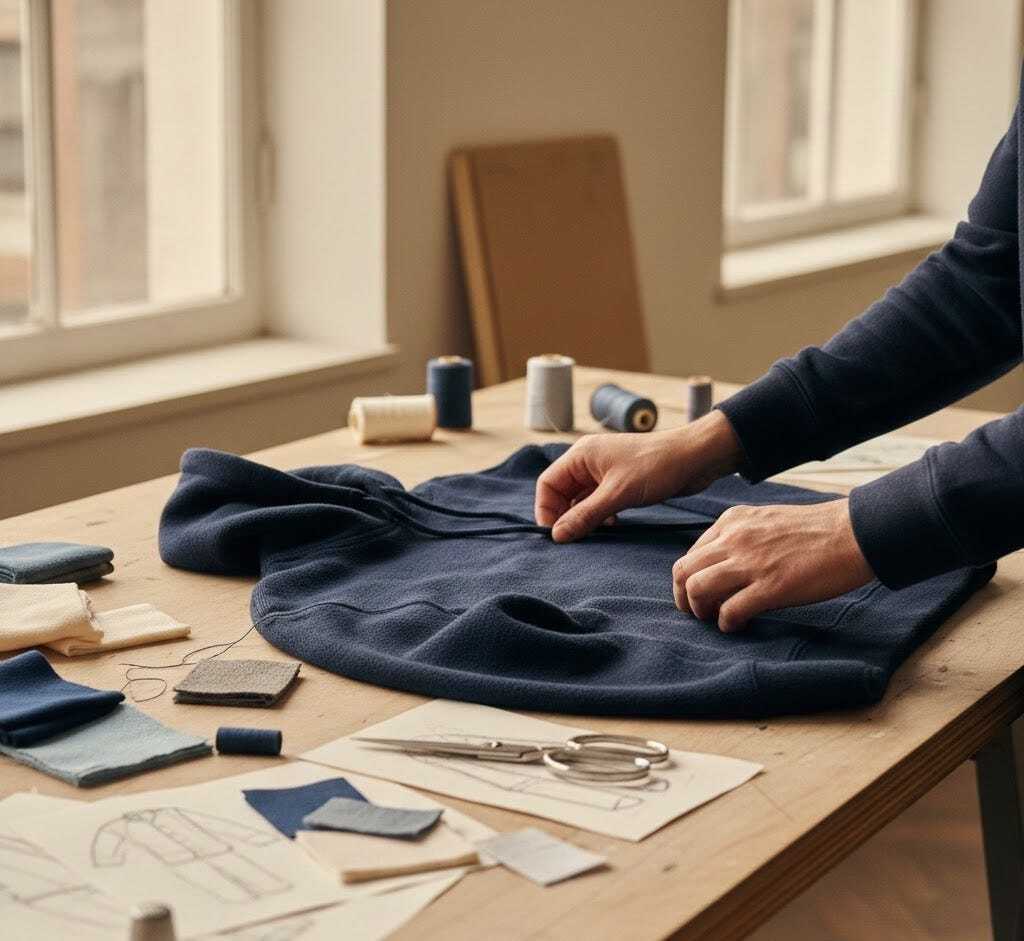
Instead, we designed a fully custom hoodie. We partnered with a factory that had opinions about fabric weight, colors, and decoration. They cared about everything.
On our first call with them, it lasted three hours, we didn’t talk about SKUs or unit pricing. We talked about the client’s brand story. Why the founders started the company. What they wanted their culture to feel like. What message they wanted to send to new and current employees.
After hearing questions from the factory we’d never heard before, we designed from scratch. Specific shade of navy that matched their brand deck exactly. Pocket placement based on how their team actually carries phones. We even printed the company’s mission statement inside the hang tag. Made it something people would want to keep.
Took six weeks. Cost $47 per unit.
The objection from the client’s finance team came quickly. They didn’t understand why they needed to spend double when cheaper options exist. Finance didn’t understand that they were not just buying hoodies. They were making a statement about what the company values.
Every new employee will get one of these on day one. It’s the first physical thing they’ll receive. It will shape how they think about the culture. About whether they cut corners or obsess over details.
Same with investors. Partners. Prospects.
When someone puts on a generic hoodie, they think “free stuff.” When they put on something genuinely well-made, they think “this company cares.”
That’s not marketing fluff. That’s measurable brand equity.
The Result
Those hoodies became their most requested item ever.
New employees asked about them before their first day. Candidates mentioned them in interviews as one of the reasons they wanted to join. The CEO continues to wear his on investor calls.
The company ordered two more runs with different colorways because everyone involved cared about craft. Not just hitting order minimums.
Vendor vs Partner
When you work with a vendor, you’re buying a commodity. You optimize for price and speed. The vendor optimizes for volume and efficiency.
There’s no incentive to optimize for impact.
When you work with a creative partner, the entire conversation changes. You’re collaborating on something that matters. They bring expertise and ideas. They challenge your assumptions. They care about the outcome.
The best merch partners should be asking you to share brand guidelines before discussing products. They want to understand the story before suggesting solutions. They push back when something doesn’t align with the brand.
That’s the relationship you want.
Not someone who says “yes” to everything and ships whatever’s easiest. Someone who has the confidence to say “this won’t work” and the creativity to propose something better.
The Lesson
Everything in your business has a vendor version and a partner version.
You can hire a vendor to build your website. Or partner with a designer who cares about the user experience.
You can work with a vendor accountant who files your taxes. Or partner with a CFO who helps you think strategically about capital allocation.
Same with merch.
The vendor approach is faster. Cheaper. Easier.
The partner approach takes longer. Costs more. Requires actual relationship building.
Most companies default to the vendor approach because it feels easier and safer. It’s predictable. It’s what everyone else does and then they wonder why their merch doesn’t land. Why employees don’t wear it and clients don’t keep it.
It’s because nobody cares about commodities. People care about things that were made with intention. That tell a story. That reflect real thought and craft.
You have to build it with someone who gives a shit not buying it from a catalog.